
Sub-Total: $0.00
Research Findings
Many people currently have trouble falling asleep. This article describes a highly effective approach that involves no chemicals or supplements and no expensive psychotherapy. It is based on how we fell asleep as children—by being read to until we drifted off, at which point our parents would stop reading out loud and let us sleep.
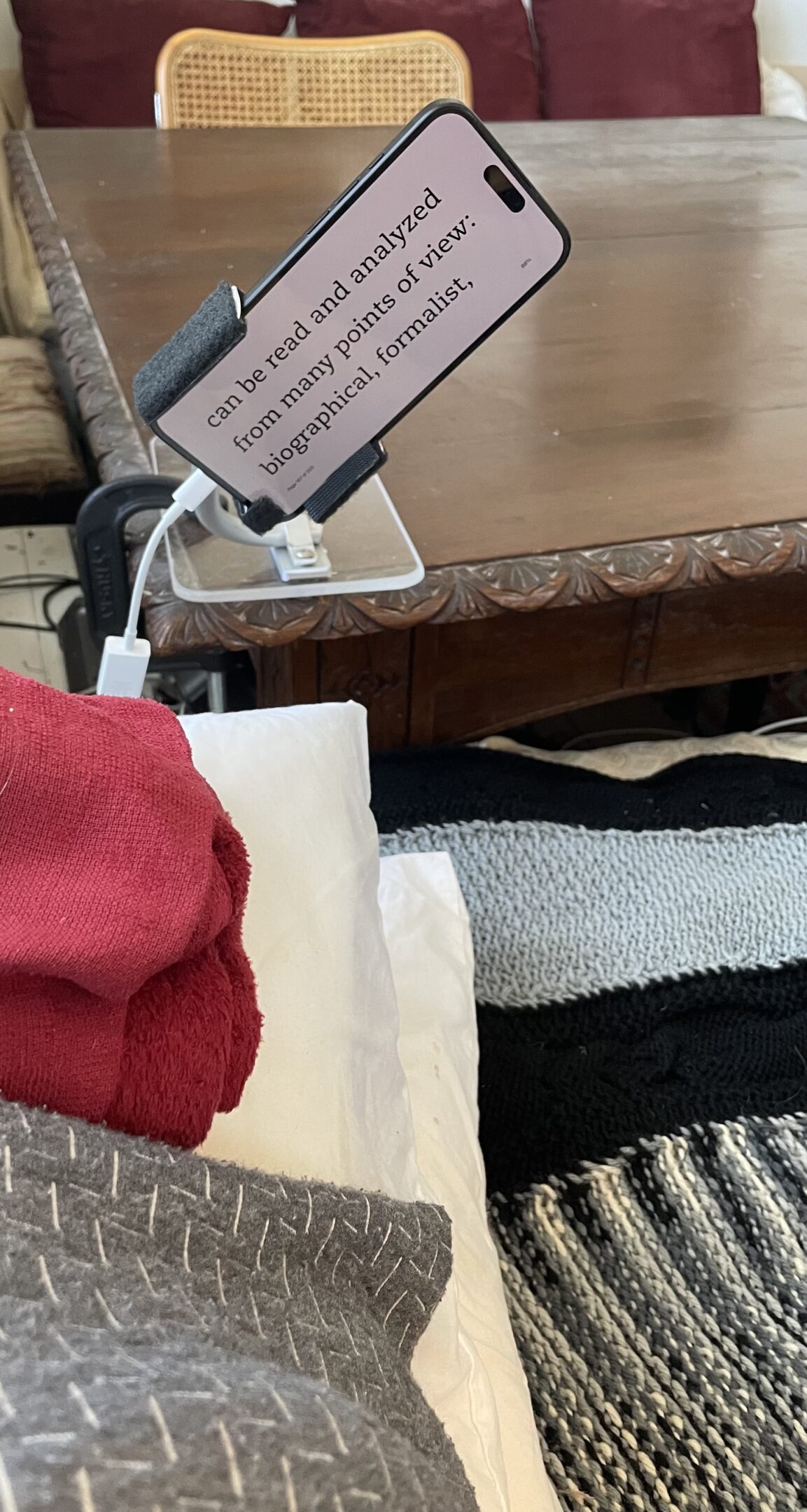
This technology also enables you to quietly read, watch, and/or listen on your side in bed to many types of media on your iPad or iPhone: regular digital books, podcasts, audiobooks, movies, TV programs, news and magazine articles, symphonies, music albums, meditation sessions, and voice recordings of speeches and notes.
The trouble in today's world is not that people have failed to learn how to handle stress or relax through meditation or some other approach. Rather, the issue is different: to fall asleep, one must allow oneself to drift off. The modern, active mind resists drifting off as soon as it begins, over and over again.
To make matters worse, many current media approaches simply do not work to solve this problem for various reasons. Music will inevitably have a loud section that wakes you up. Reading pages of text on a screen involves blue light, which often keeps you awake or wakes you up every time the page changes. Many calming sounds, like raindrops or ocean waves, do not last long enough in the cycle to provide sufficient time to drift off completely. Raindrops recycle almost instantly, and a wave recording cycle is no more than two or three seconds, which is still too short.
The Ideal Solution: Listening to Books Read Aloud
Listening to books read aloud is the ideal choice. However, several problems must be overcome first:
The sound must be quiet so as not to disturb others in bed or in a shared living space.
Earbuds and headphones are not viable options, since most ears cannot tolerate their pressure for long. The sustained pressure from earbuds or earphones is uncomfortable, and they do not fit comfortably on a pillow. This is true whether sleeping on your back or either side.
Earphone and earbud cables get tangled with the neck and body as you move around during sleep.
The sound must be able to turn off at a selected time interval.
Ideally, the voice should be selectable, and the speed at which the person speaks should be adjustable.
Sometimes, turning off the sound at the end of a book is enough to wake you up.
The shutdown process must be silent—any loud power-off noise will wake the listener.
How the Speaker Pillow Solves These Problems
Fortunately, there is a solution for each of these issues:
01
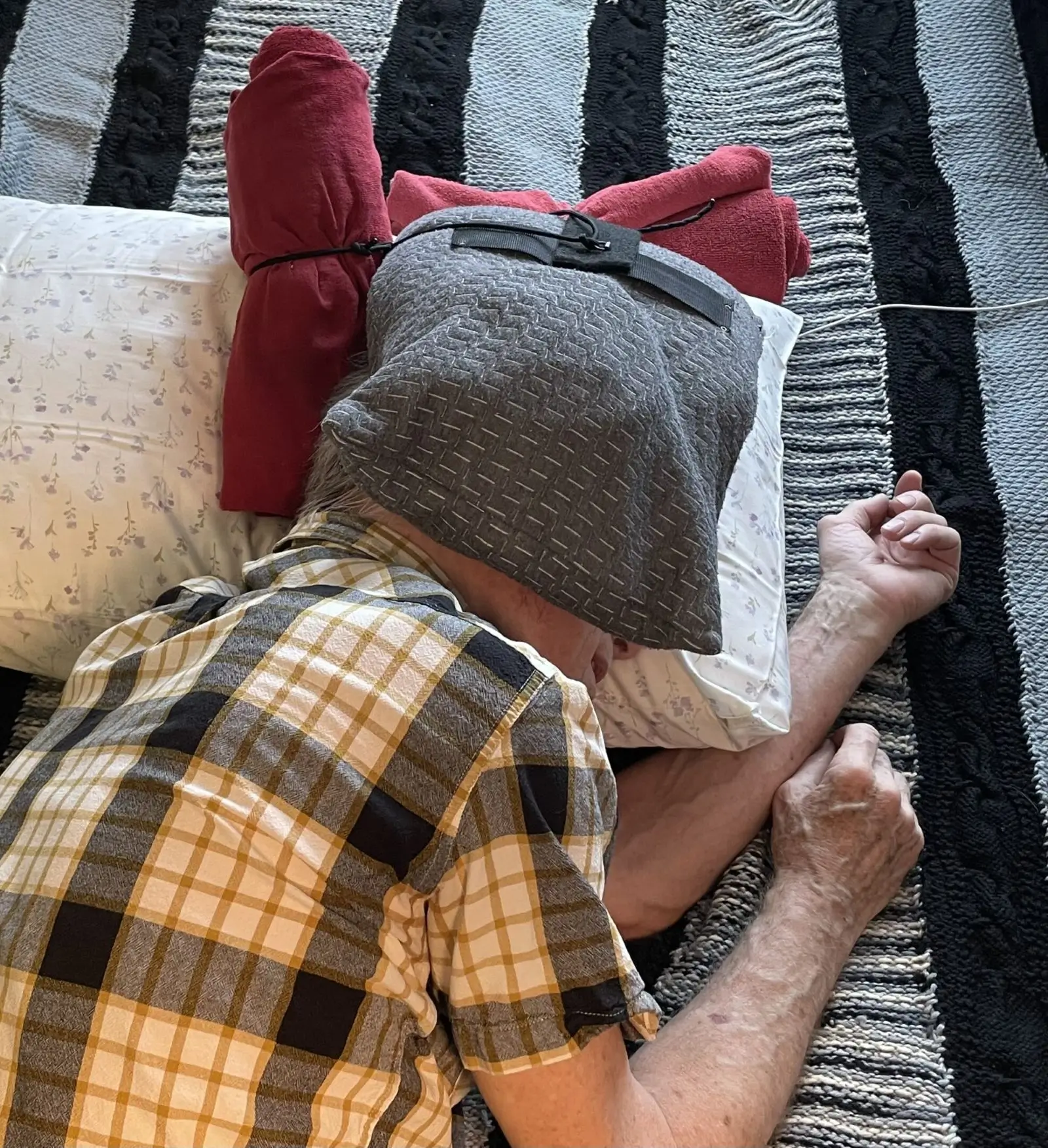
Earphone pressure problems are solved by using a small pillow with a built-in cavity and speaker that faces the ear but never makes direct contact.
02
The sound transmission allows audio to enter both through the ear and via bone conduction, creating a centered audio experience.
03
Comfort for all sleep positions is ensured, whether sleeping on the left or right side or on your back.
04
Optional screen viewing is possible when lying on either side.
05
No tangled cables—the speaker cable stays directly behind the head and under the headboard side of the lower pillow, preventing any chance of entanglement.
A Bluetooth pillow speaker would eliminate the cord problem, but such speakers currently emit a loud noise when the power shuts off, waking the user. Additionally, many people object to prolonged exposure to a Bluetooth signal near the head. This is unnecessary, as the Speaker Pillow’s wired connection remains out of the way and does not require significant amplification.

Pressure and Comfort Considerations
The design of the pillow speaker must prevent undue pressure from the rim of the speaker cavity on the head and face. The head is heavy and requires a large pillow surface to distribute pressure evenly. Without proper distribution, a "ring of pain" can develop on the head and face at the edge of the speaker cavity, which can be even more uncomfortable than earphones.
This problem is solved by positioning the pillow speaker on the upper side of the head, above the upper ear, while the head and lower ear rest on a normal pillow. This setup provides:
Head warmth
External noise protection
Light avoidance
These additional features help users fall asleep quickly.
Using VoiceOver for Timed Audio Playback
You can use VoiceOver on an iPad or iPhone to read text at your preferred voice and speed while simultaneously setting a timer for a chosen period. The Apple timer offers an option that many people do not know about: instead of selecting a sound to play when the timer runs out, you can choose "Stop Playing" at the bottom of the list. This setting will automatically stop playback of VoiceOver or any other media (TV, audiobook, movie, symphony, podcast) at the selected time.
For an additional wake-up reminder, a second device can be used to set a separate timer that plays a sound.
Additional Features of the Speaker Pillow
Underlying Principles
The success of the Speaker Pillow is built on research conducted by Proportional Reading, which explores the use of spoken text to improve focus, concentration, and comprehension in individuals with reading challenges such as dyslexia and ADHD. Additionally, it has been found helpful for those experiencing grief, anxiety attacks, or frequent negative self-criticism. The fundamental discovery is that the mind struggles to process two different subject matters simultaneously. Troublesome thoughts quickly give way to the ongoing, quiet sound of spoken text. Alternatively, you can use the very quiet “music of prose,” where the sound is barely audible, and most of the words cannot be distinguished. Try both approaches (different sound levels) to determine which works best for you. The sound of spoken text, in either form, can help prevent intrusive thoughts from interfering with sleep.
This principle can also be effective in preventing nightmares and negative self-criticism, not just when falling, but also during or at the end of sleep. Pay attention to what you discover and experiment with different timer settings.
The Positive Habit Cycle
Underlying all these findings is a fundamental principle of growth through the development of habit, followed by moving beyond it. I call this the Positive Habit Cycle with Seven Steps:
While this approach does not claim to eliminate negative thoughts entirely throughout the day, it can provide relief from stress during the night, upon waking, or when taking a quick nap. By using the Speaker Pillow and the techniques described above, you can improve your sleep quality—whether you prefer sleeping on your side or back.